
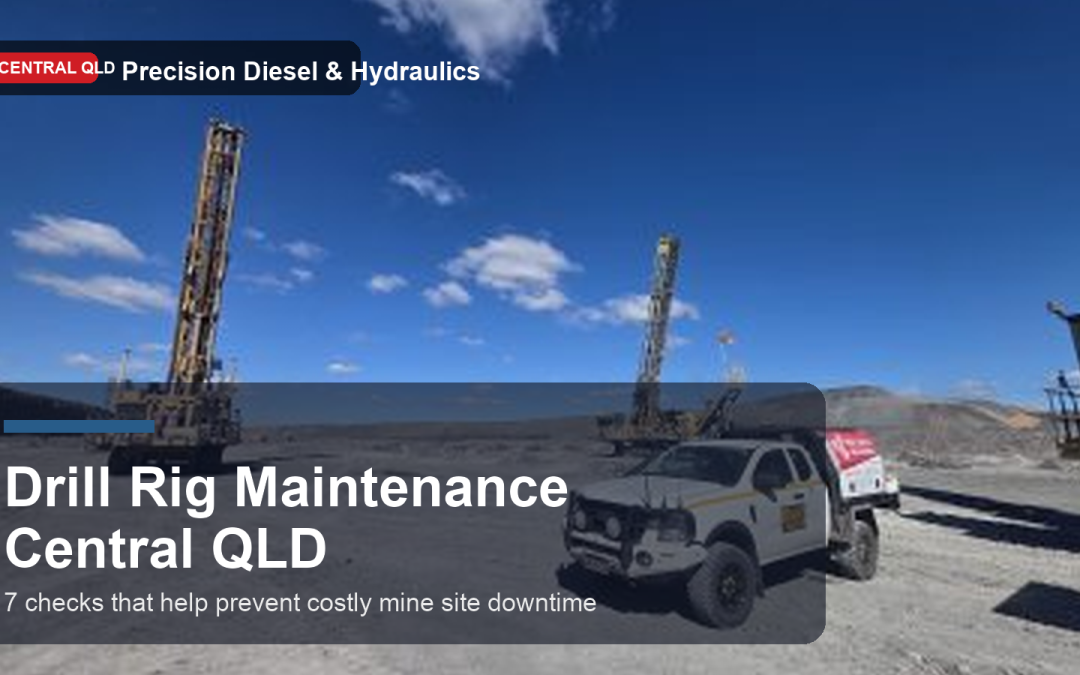
Across Central Queensland, drill rigs operate in dust, vibration, heat and long production cycles that put constant pressure on hydraulic, lubrication and mechanical systems. That is why drill rig maintenance in Central QLD needs to be built around disciplined inspections, not just reactive breakdown repairs.
Why drill rig maintenance matters in Central Queensland
When a rig goes down unexpectedly, the impact is immediate. Production slows, site schedules slip and repair work gets forced into emergency mode. A stronger maintenance routine helps catch wear earlier, supports safer operation and reduces the chance of a small issue becoming a major downtime event.
For mining and drilling operators across Central Queensland, the checks below are practical ways to improve equipment reliability while linking planned servicing with field service and breakdown support in Central QLD when urgent faults still occur.
7 checks that help prevent costly drill rig downtime
1. Inspect hydraulic hoses, fittings and visible leaks
Hydraulic systems sit at the centre of drill rig performance. Damaged hoses, sweating fittings, leaking cylinders and contamination around components can all point to deeper reliability issues building in the background. Catching those signs early helps avoid pressure loss, unsafe failures and preventable downtime.
2. Monitor lubrication points and auto-grease performance
Lubrication faults usually create accelerated wear before they create obvious failure. If grease lines are blocked, injectors are not cycling properly or reservoirs are running low, high-load components can wear much faster than expected. That is why grease and lubrication systems in Central QLD should be treated as a core maintenance priority, not a secondary check.
3. Check filters, service kits and fluid condition
Dirty filters and degraded fluids shorten the life of hydraulic and mechanical systems. Regular filter changes, service kit planning and fluid condition checks help reduce pump wear, valve issues, cylinder damage and contamination-related faults across the rig.
4. Review drill mast, feed and rotation system performance
Changes in mast movement, feed speed, rotation response or drilling performance often appear before a full failure happens. Operators tend to notice those changes first, which means accurate reporting back into the maintenance process is valuable.
5. Inspect wear parts, mounts and structural stress points
Drill rigs operate under heavy load, so maintenance inspections should look beyond basic service items. Mounts, pins, attachment points, guards and structural areas all need regular review for signs of movement, cracking or unusual wear, especially on high-production mining sites.
6. Keep spare parts planning ahead of failure
Waiting until a part fails before sourcing replacements usually extends downtime. A stronger approach is to identify high-wear items and critical stock before the machine needs them. Planned access to drill rig spare parts in Central QLD can be the difference between a short service interruption and a much longer production hold-up.
7. Use field service findings to improve planned maintenance
Breakdown call-outs should feed directly back into the scheduled maintenance plan. If the same faults keep appearing, or if certain systems are wearing faster than expected, the inspection focus and service interval may need to be adjusted. That loop between workshop planning and field response is what makes maintenance programs more effective over time.
Why preventative maintenance pays off
Preventative maintenance gives operators more control over labour, parts, timing and component life. Instead of responding to failures at the worst possible time, businesses can plan work, reduce risk and improve availability. In practical terms, that usually means safer operations, fewer emergency repairs and better use of every maintenance dollar.
Frequently asked questions
How often should drill rigs be inspected in Central QLD conditions?
Inspection frequency depends on the equipment, duty cycle and site conditions, but high-use drill rigs generally need disciplined daily checks, scheduled servicing and more detailed periodic inspections to stay reliable.
Why do lubrication system issues cause so many maintenance problems?
Lubrication faults often create wear gradually. By the time the problem is obvious, bearings, pins, bushes or other moving parts may already be damaged.
Can planned maintenance really reduce breakdown call-outs?
Yes. Planned maintenance does not eliminate every failure risk, but it helps identify wear earlier, schedule repairs properly and reduce the number of avoidable emergency breakdowns.
Need dependable drill rig maintenance in Central QLD?
Precision Diesel & Hydraulics can support planned servicing, fault diagnosis and field maintenance for mining and drilling equipment across the region.