
Early diesel engine diagnostics help turn uncertain symptoms into a clear maintenance decision before they become a worksite failure. For equipment owners, the useful first step is to notice what has changed, record the conditions and arrange a professional assessment.
Do not ignore changes in normal operation
Hard starting, reduced power, warning lights, unusual smoke, increased fuel use, overheating, rough running or unfamiliar noises can all point to an issue that needs attention. A symptom is not a diagnosis on its own. Modern diesel systems are interconnected, and one warning can be linked to fuel delivery, air intake, sensors, cooling, electrical systems or mechanical wear.
Early attention helps prevent small issues from becoming more disruptive repairs. Follow the equipment manufacturer’s instructions for warning indicators and operating limits.
Record the conditions around the fault
Useful details make fault finding faster. Note whether the symptom occurs under load, after start-up, at a particular temperature or only intermittently. Record warning messages, service history, recent repairs and changes in fuel or operating conditions.
- When did the symptom first appear, and how often does it happen?
- What was the machine doing when the warning appeared?
- Which warning messages or fault codes were displayed?
- Has any servicing, repair work or change in operating conditions occurred recently?
If it is safe to do so, photographs of dashboard warnings or visible leaks can help. Do not approach moving parts or hot components to collect information. Share the machine’s make, model and operating hours when booking support.
Diagnostic tools support an experienced inspection
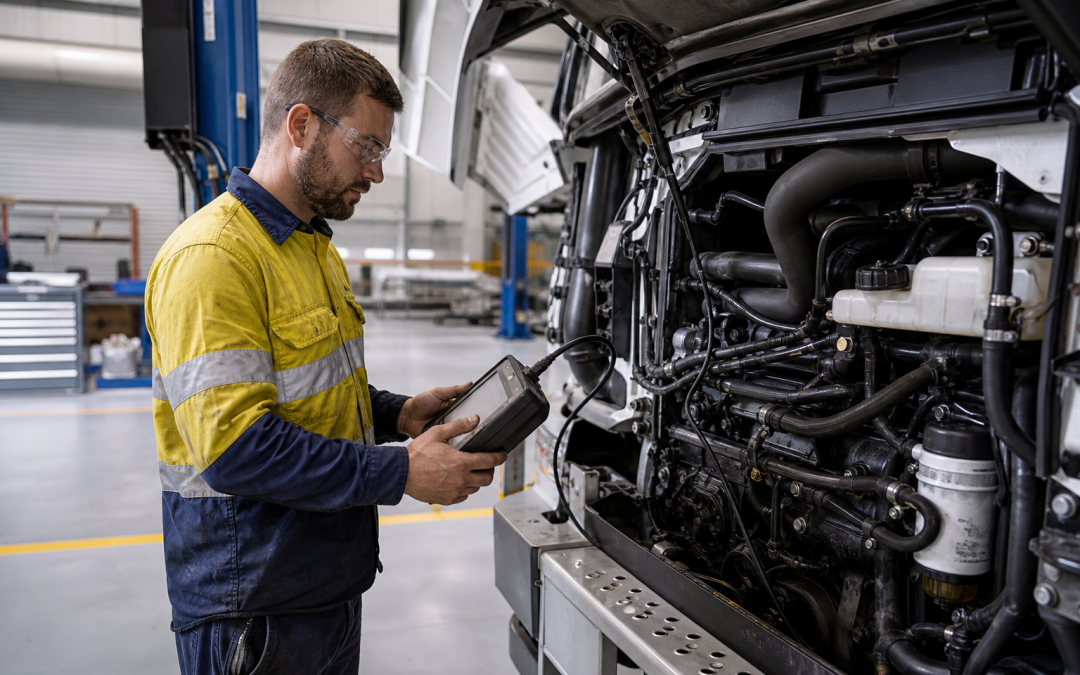
Scan tools can identify stored fault codes and live data, but they are only part of the process. Codes need to be interpreted alongside physical inspection, testing and an understanding of how the engine is being used. Replacing parts based only on a code can waste time and money if the underlying cause has not been confirmed.
A structured diagnostic process helps identify the most likely source before repair work is recommended. Ask the technician to explain the findings, the recommended repair and whether any further testing is needed.
Act early to avoid secondary damage
A cooling problem, air leak, fuel issue or sensor fault can affect more than one part of an engine if it is left unresolved. Continuing to operate while an engine is overheating or displaying a serious warning can cause additional damage and unplanned downtime.
Follow the manufacturer’s guidance and stop operation when required. Keep people clear of unsafe equipment and arrange assessment. For urgent site issues, review Precision’s field service and breakdown support options.
Make diagnostics part of maintenance planning
Regular servicing and prompt investigation of performance changes give equipment owners a better chance of planning repairs. Keep service records and share the machine’s work type, operating hours and previous issues with the repair team.
After repairs, retain the diagnosis and work record. Follow the recommended service intervals and report recurring symptoms promptly. Consistent records help the next technician distinguish a new fault from an unresolved issue.
Common diesel diagnostics questions
Does a fault code identify the part that needs replacing?
Not necessarily. A code identifies a condition detected by the system. Further checks may be needed to establish whether the cause is the component, its wiring, another system or an operating condition.
Should I keep operating while waiting for a booking?
That depends on the fault and the manufacturer’s instructions. Serious warnings, overheating or unsafe operation need prompt action. Describe the symptoms when requesting support so the team can discuss the appropriate next step.
Arrange equipment support in Central Queensland
Precision Diesel & Hydraulics supports mining, drilling and heavy equipment operators with maintenance, workshop repairs and field service. Contact Precision or call 0407 101 527 to discuss diesel engine diagnostics and repair support for your equipment.